
The 2026 Patio Garden Plan: Edibles!
How I’m Turning a Cracked Concrete Patio Into a Productive Kitchen Garden
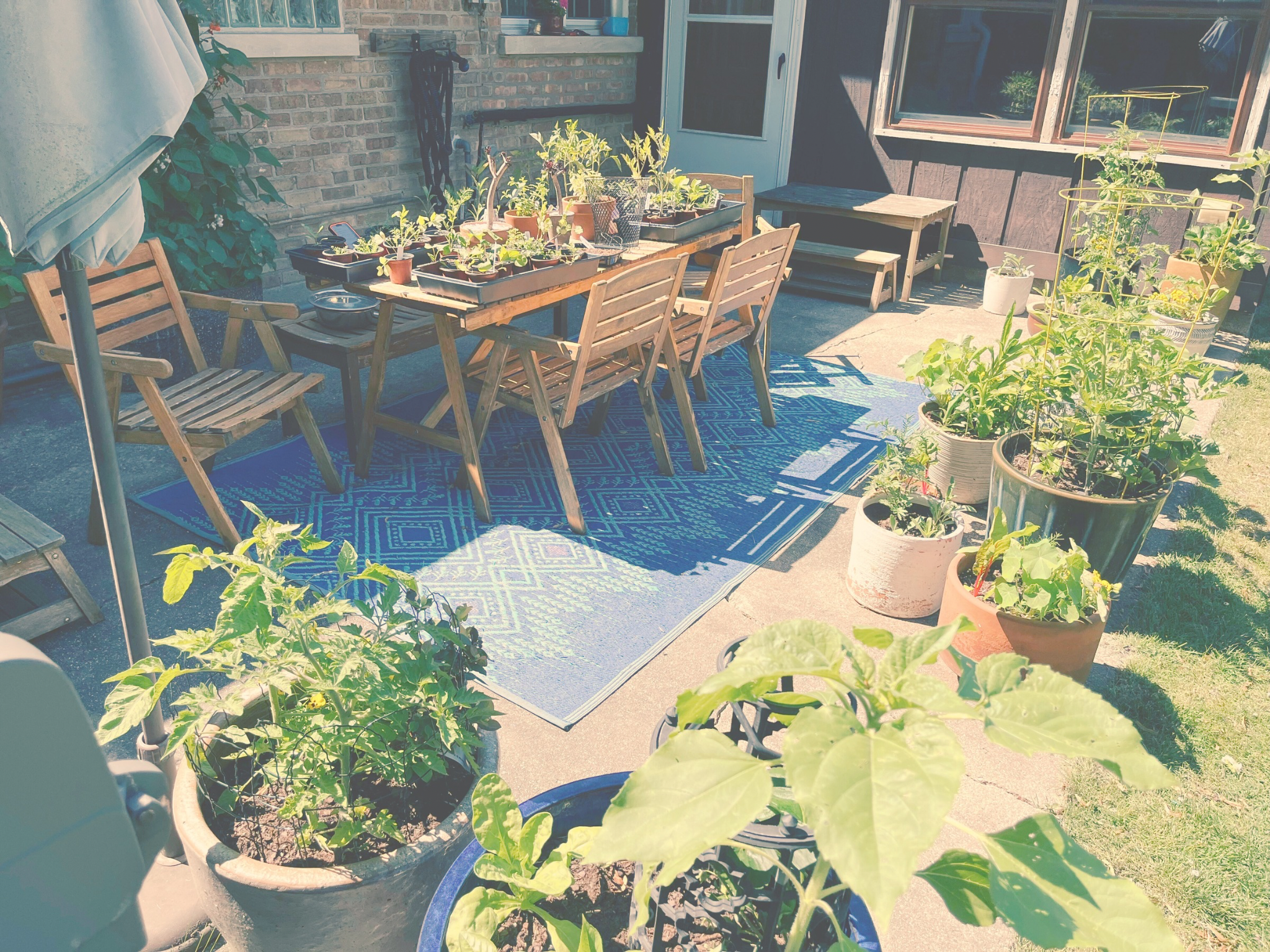
I have a patio right outside my backdoor that’s not cute, its foundation is a visual assault on my eyeballs. It’s a fading slab of concrete with more cracks in it than a conspiracy theory. Until we can replace it with pavers, my only option is to Kintsugi the crap out of it. Instead of gold, it’s pebbles and self-seeded Verbena Bonariensis and Celosia.
To further disguise the atrocities, I’ve added a bold blue outdoor rug, an aging (aka cottage-core) teak dining table, and, most importantly, about 20 gorgeous ceramic pots. Over the years, these have all successfully drawn my eye away from the disparaging concrete and up to the lushly stuffed pots.
These pots are part of The Middle Garden’s canvas, and every year I repaint it. I mostly stick to annuals, but I’ll allow a perennial if I can relocate it to a bed later.
My Patio Garden Themes Through the Years
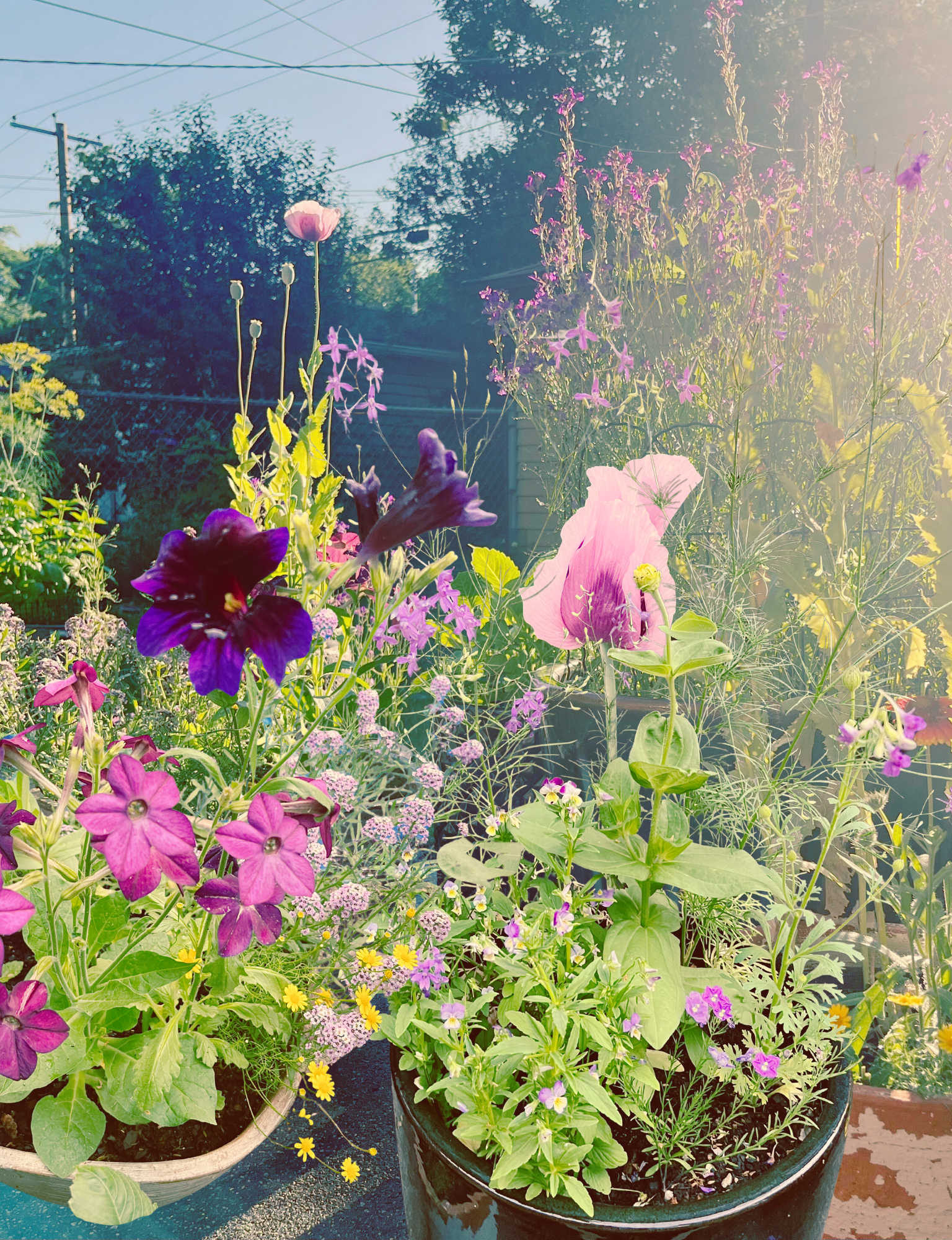
Purple Rain
In the garden beds, I try to stick to native plants. But not the patio pots. Since we moved to this house three years ago, this is where I go buck wild there. And since I have no self control at garden centers or seed retailers, I have to designate a theme that will guide my plant and seed purchases.
2023: lime green + deep purple
2024: Sunset
2025: Purple Rain
The next year’s theme typically comes to me as an epiphany when the current year’s growing season comes to an end. I kept waiting for the 2026 patio garden inspiration to strike. I thought another musical theme would hit but “Mellow Yellow’ and "Yellow Submarine” just weren’t doing it for me.
So finally I said, “fuck it, I’m doing an edible patio garden.”
And that was the lightning bolt. I let go of flowers and embraced the truth: 2026 is a veggie year.
Why an Edible Patio Garden?
You may or may not be familiar with the concept of a kitchen garden, but they tend to be closest to the backdoor because it’s within easy reach of the kitchen. So, given the patio garden’s proximity to the back door, using it for edibles is not unfounded.
Choosing What to Grow (and What to Skip)
Let the research commence! The gang on BBC’s Gardener’s World always says when you grow veg, grow what you like to eat. So I started there:
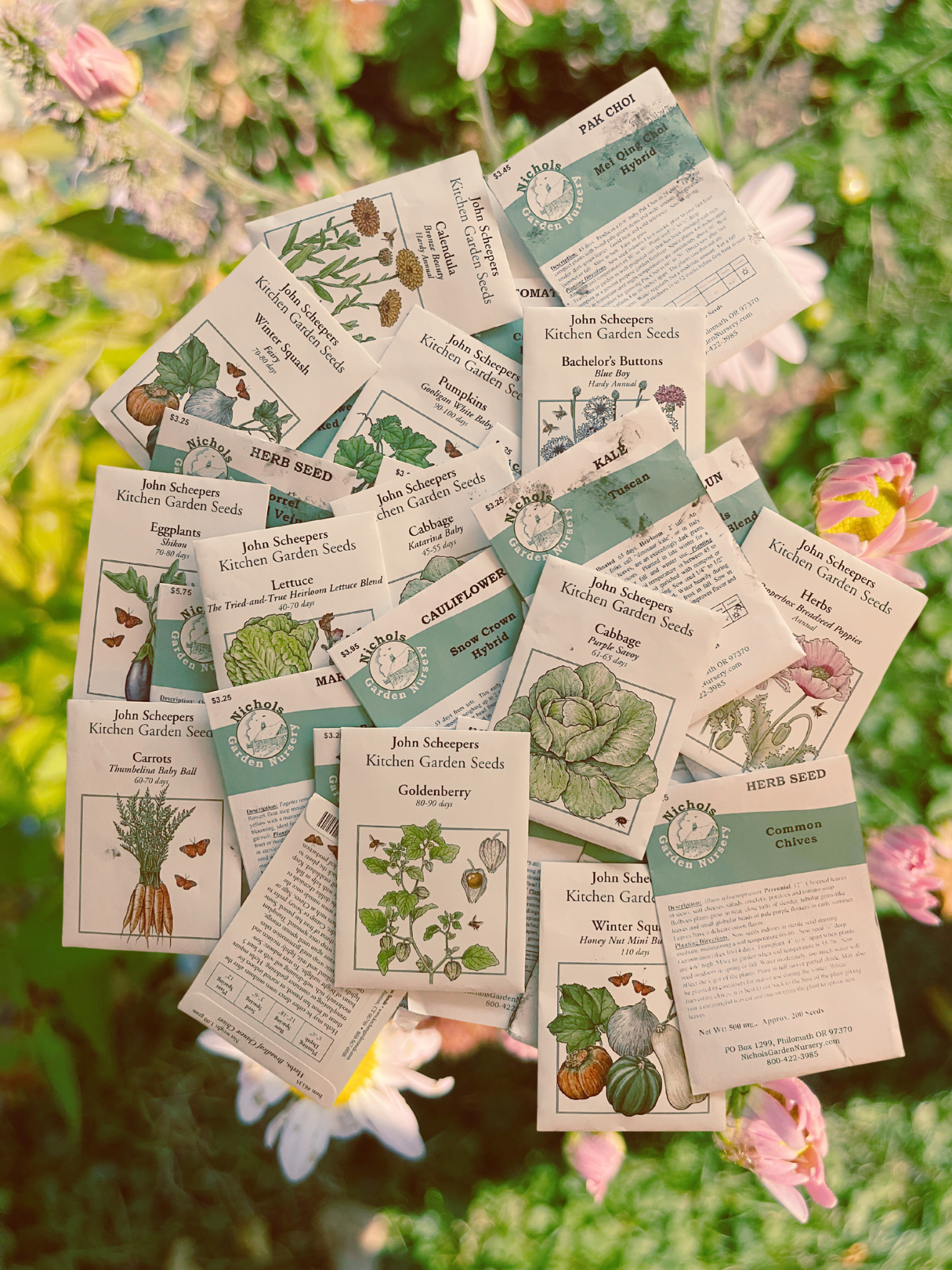
Tomatoes
Peppers
Cabbage
Pumpkins
Mixed lettuce
Chard
Kale
Eggplant
Herbs
Cauliflower
Zucchini
Winter Squash
Sorrel
… I’m not narrowing anything down, am I?
I can’t decide how much I should bore you with details. Some of these I ruled out because I had plans for them elsewhere (tomatoes, zucchinis, winter squash).
I also planned for:
Succession planting to have growth from early April to the first frost. This presents a timing challenge. What can I squeeze into the growing windows for maximum growth and harvest?
Part-shade containers. This is only a consideration for the planters that are right up against the wall of the house. Not an easy consideration for veggies who mostly love sun.
Soil rotation. For instance, planting a brassica (like cabbage) where another brassica had just been is a no-no.
The Big Reveal: My Edible Patio Garden Plan
After days of lists, schemes, considerations, spreadsheets, self-doubt, and acceptance, I present (dare I request a drumroll?)…
The 2026 Edible Patio Garden Plan
Is it a bit…much? Probably.
Is it manageable? Maybe.
Would it be perfectly reasonable to parse this down into a bite-size project? 100%
Whatever you choose to do, I believe having a plan will help immensely.
This plan includes the specific edibles I’m using and where to purchase the seeds. My growing area (Chicagoland) has arguably three growing seasons, so I’m breaking down what, how, where, and when I’m planting them. I am confident that something in here will change/fail/succeed, so I will be managing my expectation accordingly.
How the Rotation Works
Think of the spreadsheet as a guide. Use your own tastes and situations to make adjustments. Here are a few helpful explanations to help piece together the puzzle:
Pots A & Q — Early Carrots + Summer Transplants:
Carrots go in first and should be ready to harvest by the time peppers and eggplants need transplanting. I chose a smaller carrot variety that will have a shorter growing period.
Pots B & I — Two Rounds of Cabbage
I am only doing cabbage in these pots, but I’m hoping for two successional harvests of each. Since brassicas shouldn’t follow brassicas, I’ll replace the soil between crops.
Pot E — Beans With Seasonal Underplanting
Green beans will sowed in early spring and they will grow there all season. However, since it’s an x-large container, there will be enough room to grow other things: Mixed Lettuce, then Violas (my kid eats these for days) and Chinese Chives. This pot also part sun, green beans might not be as prolific as in full sun, but I should get some decent batches.
Pot P — Herbs and Seed Harvesting
This pot and similar pots will have mostly consistent plantings all season, with breadseed poppies dying off by mid-summer. Of course I’ll leave the seedheads to ripen because the whole point will be to collect the seeds for, well, bread. The rest of the planting in this pot will cover the hole the poppies leave behind.
Starting Seeds for a Patio Veggie Garden
Almost everything (except a couple herbs) will be grown from seed.
Cool-season crops: generally sown direct in early spring
Warm-season crops: started indoors or in the greenhouse or elsewhere under cover.
If you also plan to grow from seed, you’ll be guided well by the seed packet. You can also reference my guide on direct-sowing here.
Wow, that was a lot of information. I’ve had enough of myself. Hopefully I’m still making sense (did I ever make sense?). Please don’t hesitate to send a message with questions.
Happy planning and planting!