
Old Problem. New project.
I currently have twelve home and garden projects happening simultaneously. So let’s add another.
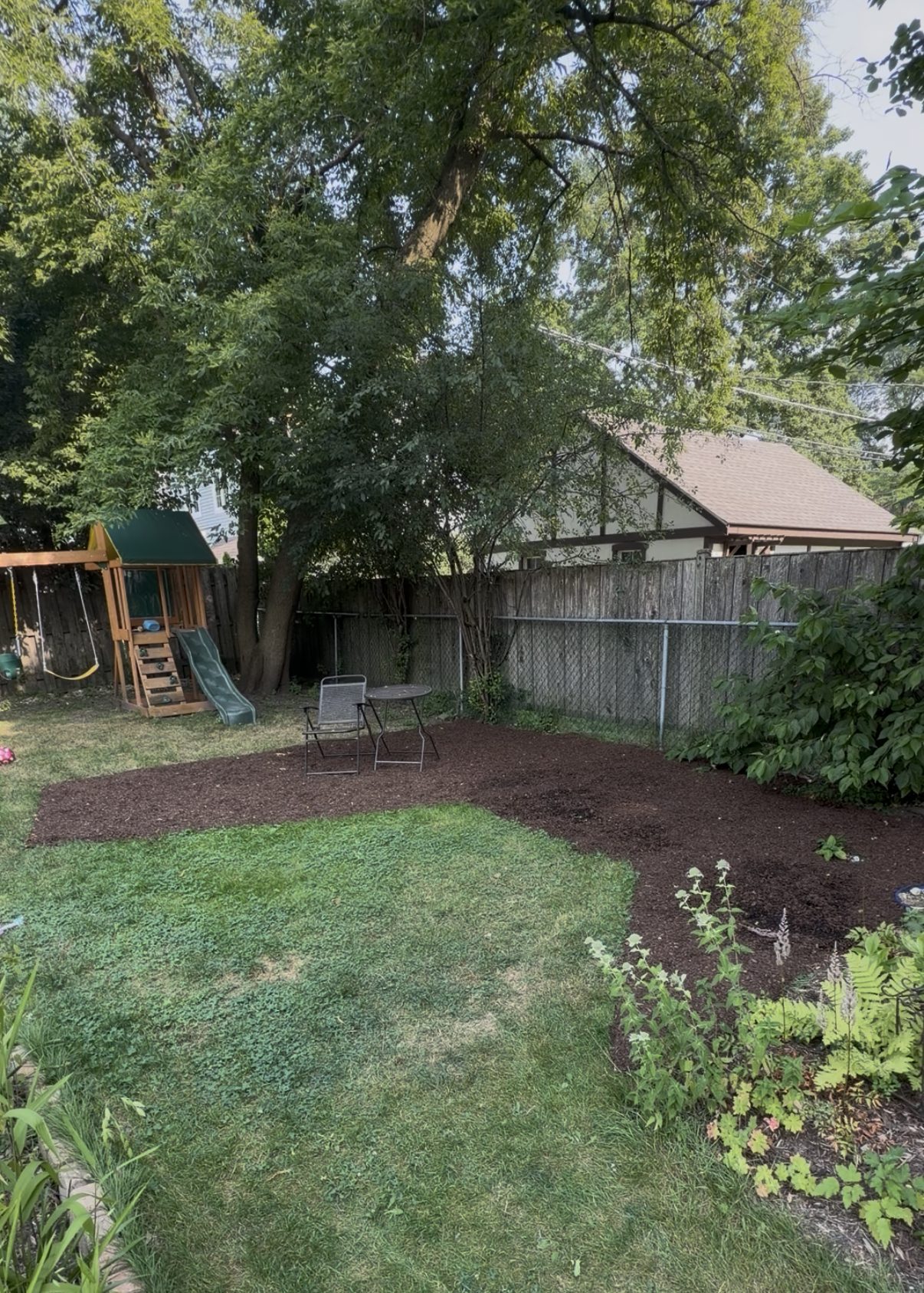
Every time it rains heavily, we rediscover that the backyard floods in a certain spot. One half of my relationship said we needed to install a drainage system. My question to that was always, “but where would it drain?”
I, an expert* on rain gardens, thought a planting scheme was in order.
*Expert in this case, means complete novice. I’ve heard about it, skimmed some online articles, and vaguely understand the general concept.
My limited knowledge suggests that what I’m planning is not a true rain garden. I will not be digging down, and I will not be creating levels to the planting. The bottom level is apparently supposed to be like…bog plants. Maybe an expert would have a ready answer for this but, “do we expect those plants to just die during inevitable dry spells?” My flooded areas dry up in a few days. Consistent bog conditions they certainly are not.
So I don’t think the conditions I have to offer would be fair to the bog plants.
Oh! And rain gardens are supposed to be adjacent to a downspout. This will not be happening. The area that floods is too far from the house.
Not a rain garden.
So yes, not a rain garden. But certainly a garden for rain. I think it’s fairly reasonable to believe that by adding a bunch of plants with complex root systems, drainage could improve. Not only will the roots absorb water, but they should also help foster the creation of a more drainable underground system. The roots will attract more worms and other soil dwellers, those natural borers of soil. More tunnel systems and aeration should create more places where the rain water can flow, seep, and drain.
Right?? Well, I suppose there’s only one way to find out. Lucky me for being the idiot who’s curiosity of the experiment won’t let small things like time and money stop her from carrying out a costly and time-intensive project.
With a twist, anyone?
But wait! There’s more! Here’s a dramatic Act II story twist that I think only a gardener could commiserate with. My non-rain-garden will be shrouded in shade. From east facing to west facing, the area gets no real direct sunlight. It’s not deep shade, praise be. It’s more just consistently indirect light.
And y’all, shade is doable. Moist shade is easiest (think hostas, hydrangeas, ferns, astilbe, etc.) but dry shade is also manageable (think wild geranium, wild ginger, other ferns, epimedium, etc.). The options are just different from our standard garden fair.
But that wasn’t the twist. This is the real twist: the shade I’m working with is the worst of both worlds, both very wet and pretty dry. I’ll be scraping the bottom of the barrel for plant selections.
Plant Selection
I love falling asleep to Gardener’s World on Friday nights. It makes for great dreams but also hazy recollections. I think Monty is currently working on a similar-ish situation at Longmeadow. I recall an explanation on aruncus (Goat’s Beard), which maybe I should add to my list.
And while I adore Monty and the team at Gardener’s World, Prairie Moon Nursery is my true hero for finding the right plants. On a pie chart of my yearly expenditures, I think they’d have their own significant slice. If I won the lottery, they’d be secondhand winners because I’d send them all my money.
Their filters allow me to search by native range, sun exposure, soil type, color, height, bloom time, and more. My search for bare root plants with the “shade” filter turned on told me I had 49 options. I was afraid to turn on the ‘soil moisture’ filter, so I poured through the 49.
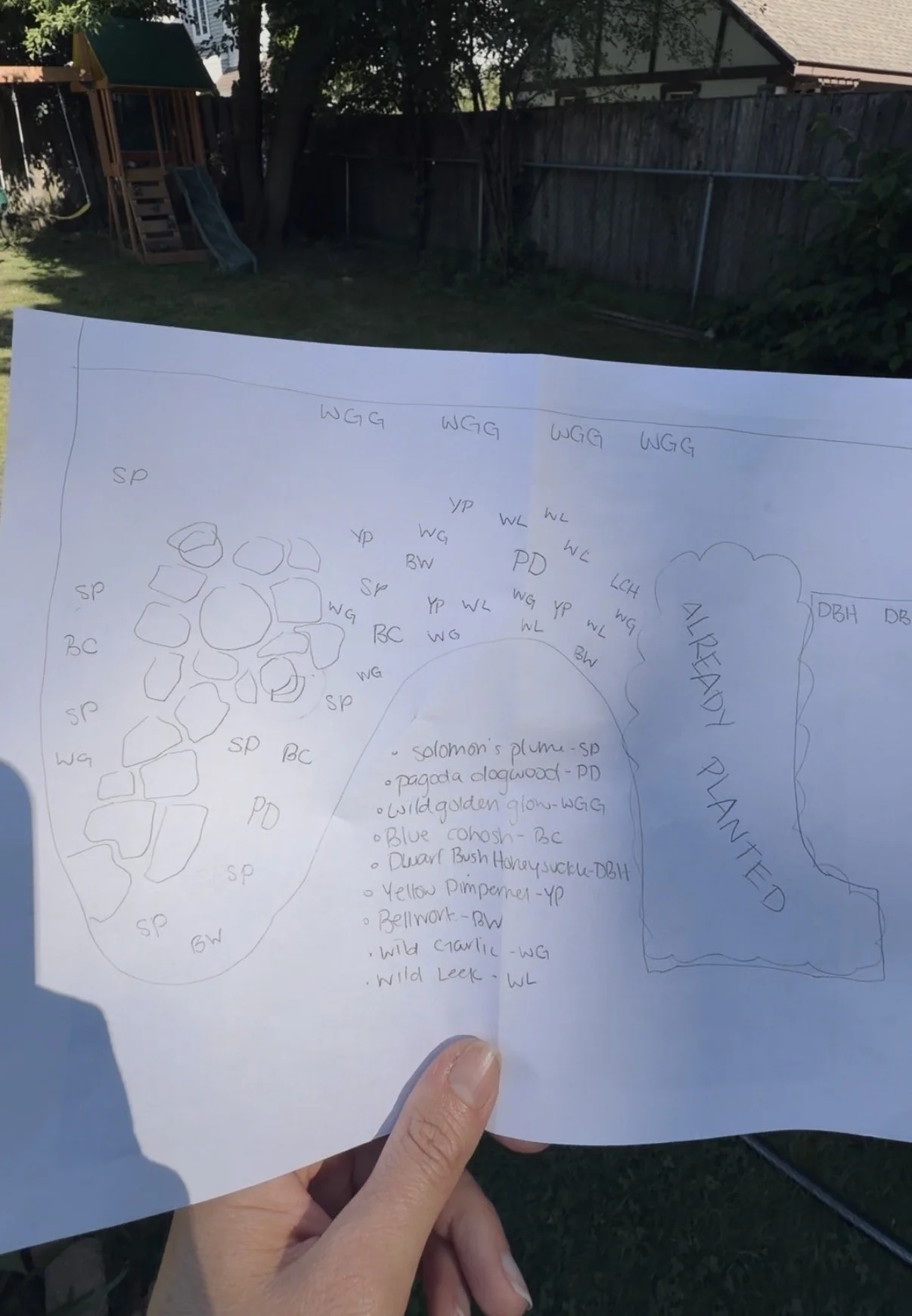
My final bare-root order included a mixed bag of:
Pagoda Dogwood
Blue Cohosh
Solomon’s Plume
Rudbeckia Laciniata ‘wild golden glow’
Wild Garlic
And I got two three-packs of:
Tall Thimbleweed
Tall Bellflower
I have been growing a few things from seed this year (also from Prairie Moon Nursery):
Honewort
Poke Milkweed
Woodland Sunflower
Woodland Knotweed
And I also ordered three more seed packets:
Yellow Pimpernel
Plains Oval Sedge
Silky Wild Rye
These will take longer to plant out but my plan is to use them as filler among the above-listed plants. Despite all the planning, there will inevitably be holes. Which I am pseudo-planning for.
Not counting the seeds (who knows how many that will get me), that’ll be a little under 40 total plants, including 2 small trees.
Time will tell.
Is that enough? Too much? I literally never know.
I swear designing a garden has to be the most difficult type of design. If you want it to look good to your eye, and for an entire growing season (or even the non-growing season if you’re ambitious), you must think far beyond standard design elements like color, texture, and structure.
As you read above, it also includes soil moisture, sun patterns, bloom time, succession. If an interior designer ordered 10 yards of fabric for curtains, they will almost certainly get what they ordered. Assuming it’s decent quality, those curtains will last all year for many years to come, requiring little attention or maintenance
The same cannot be said or expected of plants. They are their own living things and will grow, or die, to the beat of their own leaves.
This is both the absolute joy and devastating frustration of gardening life. I’d like to say the joy outweighs the frustration, otherwise why would I keep coming back.
And I hope you keep coming back to watch the progress of this new bed.