
Plant Spotlight: Spotted Bee Balm (monarda punctata)
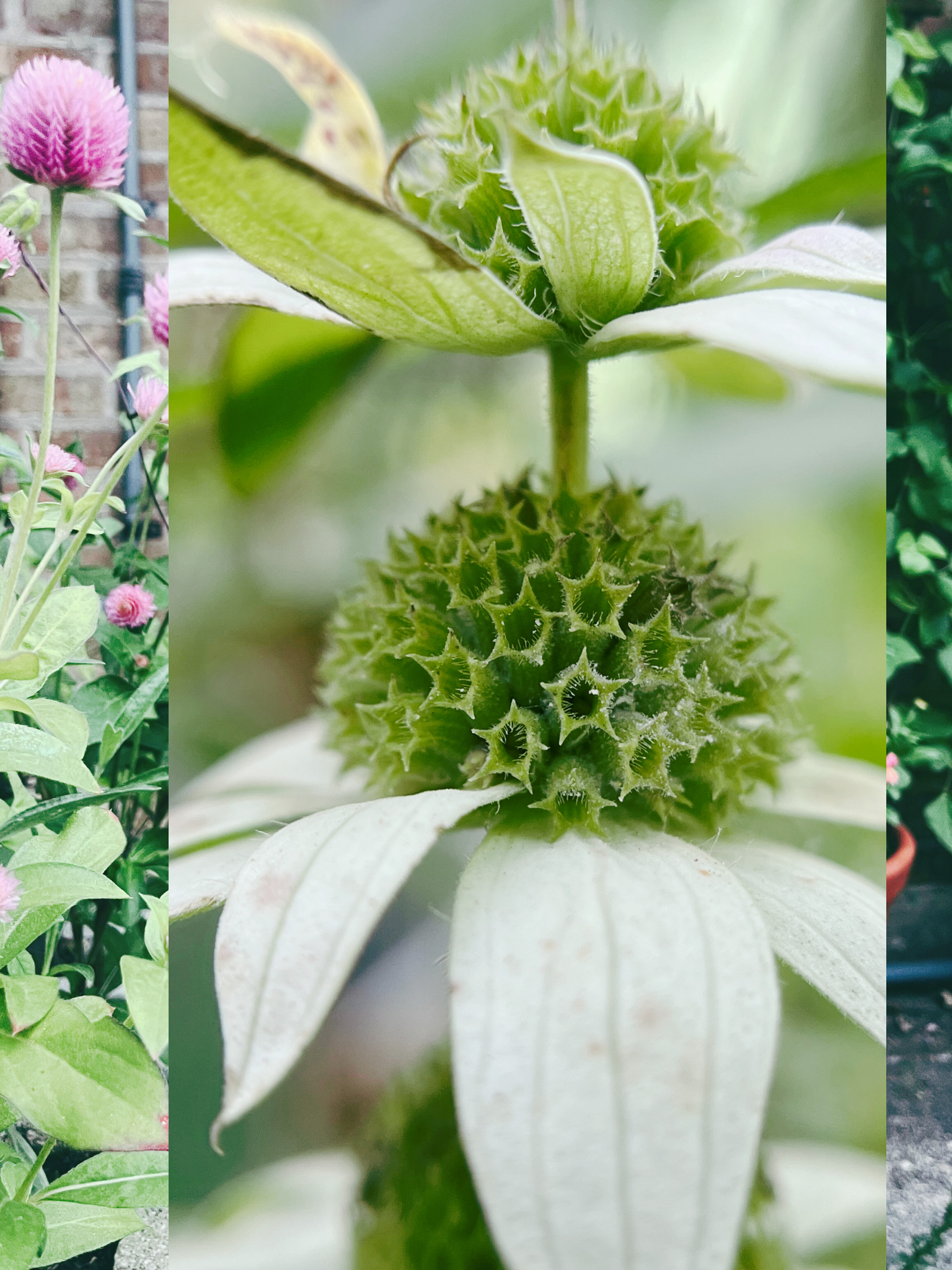
First things first: Spotted Bee Balm is a delightful little oddity.
“Weird” means either good weird or bad weird. Bad weird is Elon Musk, Peter Pettigrew, and zombie-ant fungus. They give the ick in unusual ways.
Good weird is dead man’s fingers fungi, Luna Lovegood, and spotted bee balm. These come with charm built into their strangeness.
Spotted bee balm (Monarda punctata) is the kind of weird every garden needs. It looks almost tropical, like it wandered in from Baja California. It belongs in the garden, but not in the way we’d expect. Its stacked bracts and unusual flowers will make you go, huh!? And despite its airiness, it’s a surprisingly reliable native perennial.
What Makes Spotted Bee Balm Unique
There’s surely a botanical reason spotted bee balm lives in the Monarda (bee balm) family. It has those open-mouthed flowers that, clustered together, resemble a chorus of overenthusiastic carol singers. Honeysuckle and some salvias share a similar flower shape, but they live in entirely different plant families.
Still—bee balm it is.
My receipts show I bought these seeds in January 2024, right after my first full growing season in The Middle Garden. Which raises an important question: what on earth was I thinking?
Prairie Moon Nursery, where I ordered the seeds, clearly states that spotted bee balm prefers sandy soil. And January 2024 Me absolutely knew that my garden soil is anything but sandy.
Did I not read the growing conditions? Did I not care? Was I feeling rebellious?
I have no idea. But the good news is they’re doing just fine—especially in the driest parts of the garden.
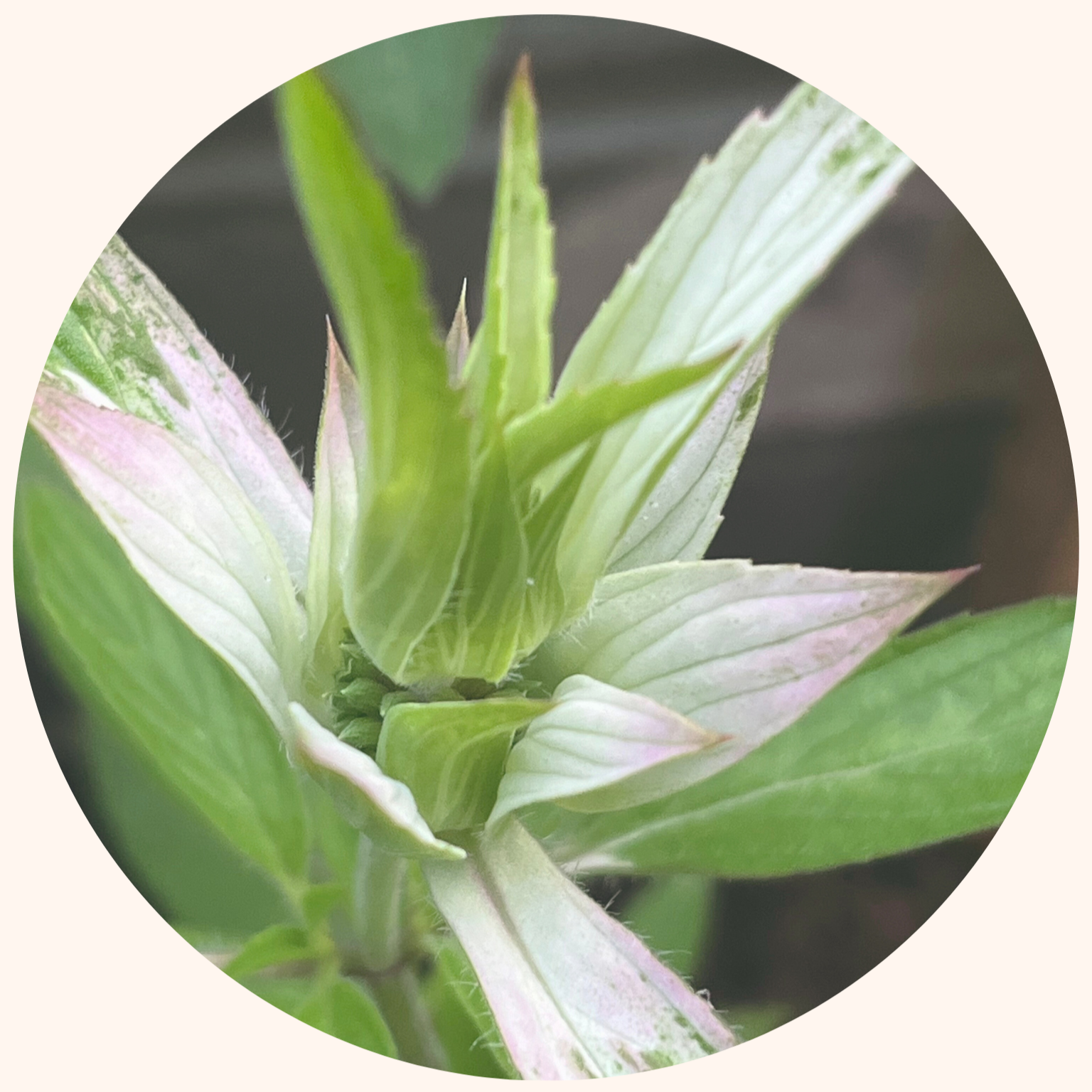
How to Grow Spotted Bee Balm From Seed
I rarely (or maybe never) see spotted bee balm at garden centers. Fortunately, it’s easy to grow from seed.
It doesn’t require cold stratification. Simply sow the seeds in warm, moist seed-starting soil, keep them watered, and place them in a sunny location. Once established, transplant into larger pots and eventually into the garden.
As a bonus, deer and rabbits tend to leave it alone, I guess they have an unwanted stank these critters are offended by (undetectable to human noses).
A Native Plant Worth Embracing
Spotted bee balm is a plant to approach with curiosity and kindness. In return, it offers intrigue, resilience, and a garden buzzing with life.
I’ve given this plant away to work colleagues and it has delighted and surprised. Try it for yourself!
Happy weirdos and happy sowing!