
Plant Feature: Snowdrops (Galanthus)
My Grinch heart broke the heart-o-meter when I saw the first snowdrop pop up yesterday. Then a few more appeared. And then there was peace on earth. They’re still standing, too, miraculously uneaten by rabbits.
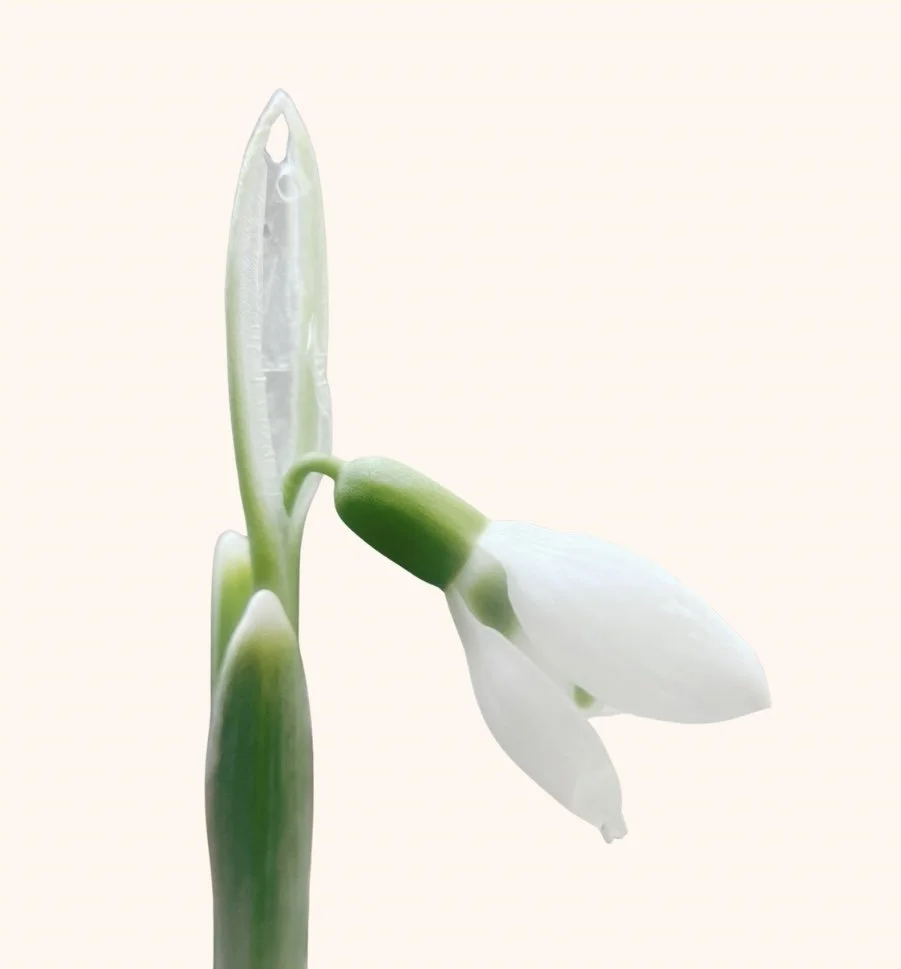
This is the first year I’ve had snowdrops in my garden, and I genuinely don’t know why I didn’t plant them during my first or second round of fall bulb planting.
Well, okay, I can explain the lapse in judgment in the first year. I confused snowdrops with snowflakes (Leucojum). They quack like a snowdrop and vaguely look like a snowdrop, but they are decidedly not snowdrops. And it’s a special kind of disappointment to learn the hard way that snowflakes don’t bloom until late spring. While lovely, they are not the early spring savior I was counting on.
True snowdrops (Galanthus) are among the earliest spring-blooming bulbs.
Why Snowdrops, though?
If snowdrops have been in a garden for many years, they form wall-to-wall shag carpeting of white blooms. They emerge right when hope is almost lost making them as stalwart as Samwise Gamgee (we wouldn't have gotten far without him).
They’d be as beloved as Edelweiss if only they came with a crooning song sung by our hero in love and war, Captain Von Trapp. Though I wouldn’t recommend planting Edelweiss, their love of alpine conditions makes them finicky to grow.
Snowdrops, on the other hand, should be planted to our hearts’ content. They are forgiving and easy going. Another cheerful early and easy riser worth planting is winter aconite (Eranthis hyemalis).
Snowdrops are not native in my area (Upper Midwest/Chicagoland) but they are especially helpful to pollinators as they provide an early food source. Late winter is a touchy time for those critters, the snowdrops are a great help.
Planting and Growing
A surprisingly delightful part of growing snowdrops is selecting the variety. I chose Galanthus Elwesii, a classic. But there are so many options with different skirts, hemlines, and petticoats. Like, check out Galanthus Elwesii Beluga. That’ll probably make it into my fall bulb order.
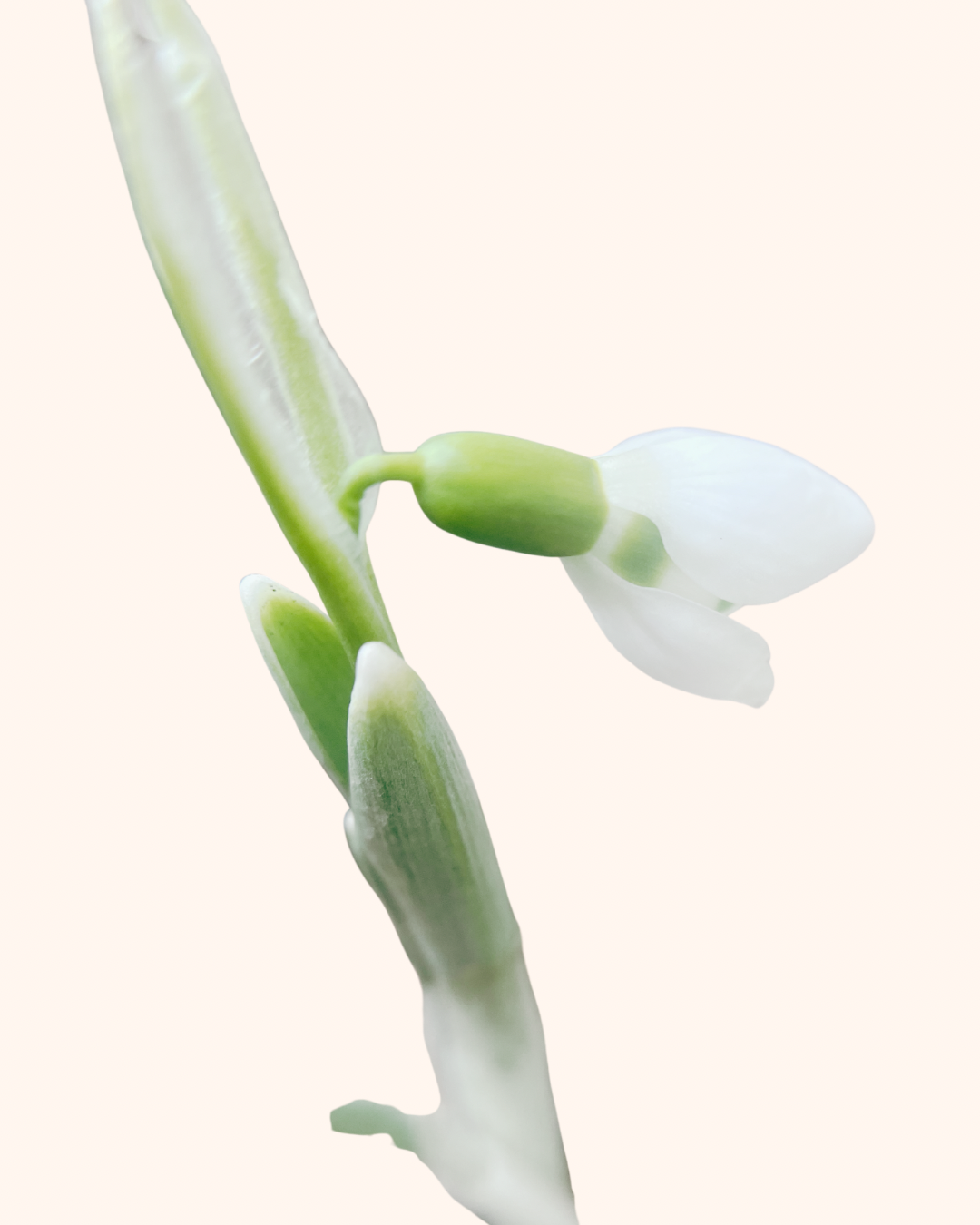
Plant snowdrop bulbs in the fall for late winter or very early spring blooms. Typically these are a woodland plant, but remember the woods don’t have leaves when these boo boos are blooming. So the instructions might say to plant in part shade, but at that time of year, planting under trees isn’t all that different from planting in a sunnier spot. So if that’s what you’ve got, I say its worth the try.
Once established, snowdrops naturalize easily. They’ll pop up each year with a little more chunk than the year before. Eventually, they’ll need to be divided.
After flowering (while the leaves are still green), dig up the plant and gently separate the bulbs. Plop them into desired spots around the garden or give them away!
It is worth spreading the joy. Snowdrops are the salve at the end of a long, raw winter. Blossom of snow may you bloom and grow, bloom and grow forever.