
Seedling ID #3: Nigella (Love in a Mist) Sowing Difficulty Meter: 2/10
One of my favorite parts of planting Nigella is getting transfixed by their beautiful velvety black seeds. Inevitably, they’ll always stop me in my progress and demand my attention. And I happily give it, not anticipating how much time they end up thieving. But I suppose we’re all told to stop and appreciate the little things. Well thank you, Nigella, for a job well done. And we haven’t even started.
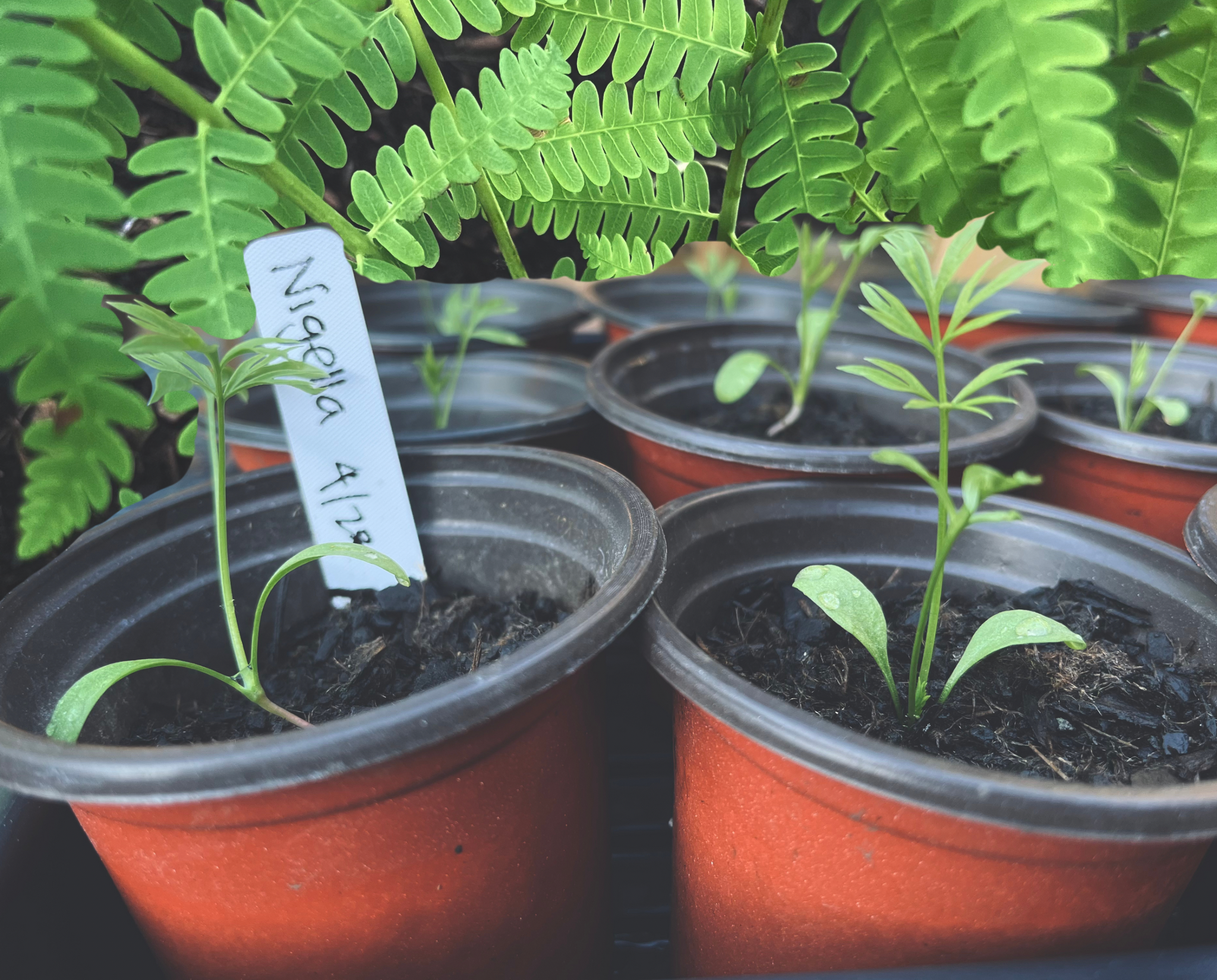
Newly emerged Nigella seedlings.
Nigella is also commonly known as Love in a Mist, which has to be one of the top five best names for a plant. How apt and whimsical. I didn’t research it but I can only guess the person who named this thought the seed head was reminiscent of a heart and the dainty tendrils and leaves that frame it is the mist.
Nigella emerges with elongated seed leaves that make way for multiple stems with those dainty tendrils. These tendrils are suggestive of the ‘mist’ described above, which not only frame the flower and seedhead but are also the leaves. The lacey leaves will be the main indicator that you’re growing Nigella. Nigella does not have a scent, so no help there. As the root grows over the next couple of weeks, the seedling growth may stall. But after that, they will really start to take off and then you’ll know, without a doubt, that you’ve got Nigella. Her bold wispiness is unmistakable and once you get those flowers, let your heart sing! And the show doesn’t stop there, those seed heads are a spectacle all on their own.
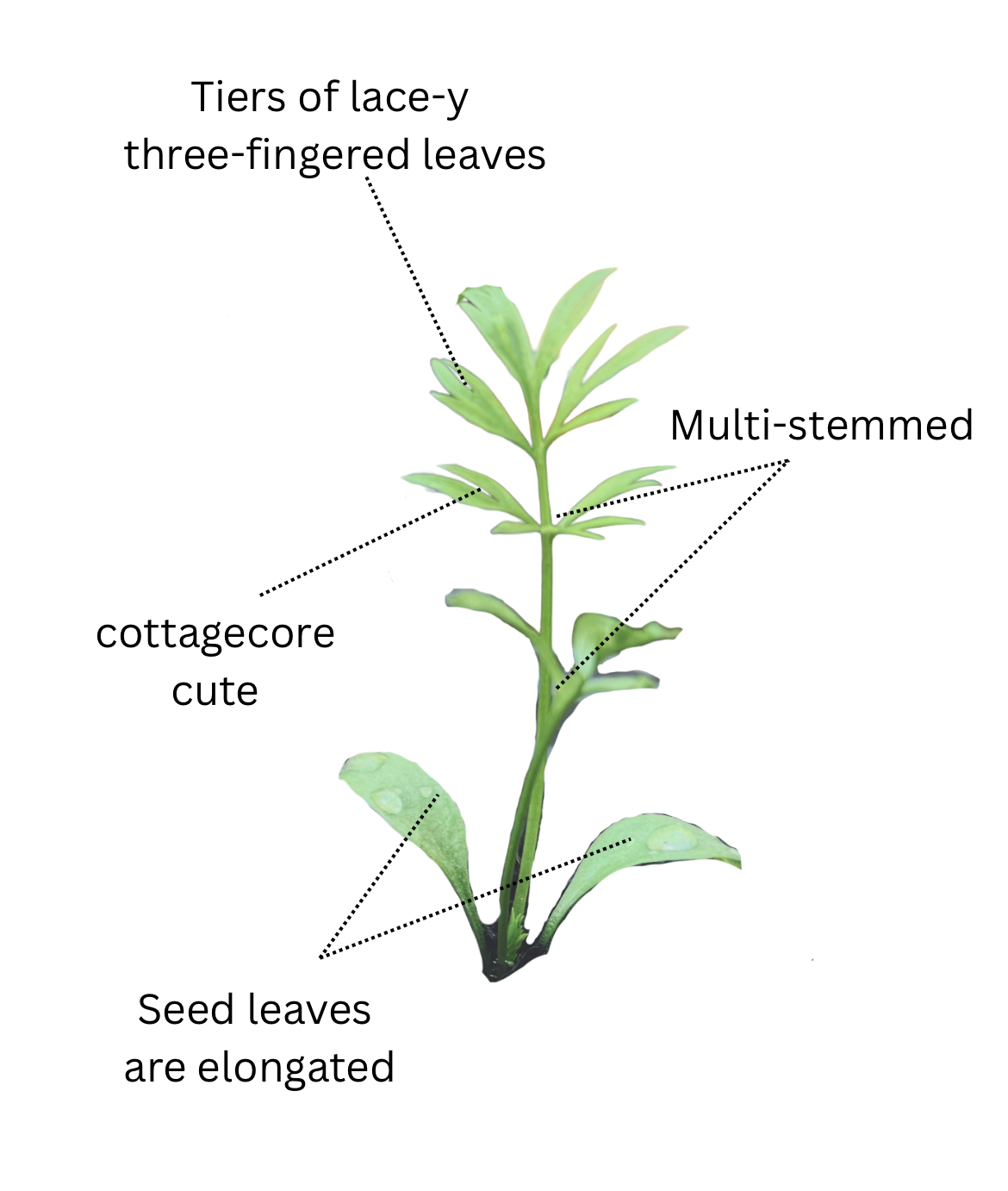
Technical anatomy of a Nigella seedling
In my garden, and probably many gardens, Nigella is a reliable self-seeder. That is to say, while it is an annual, it will drop seeds that will go dormant over winter, then germinate and start to grow in the spring. It’s not too picky about conditions, which is why it’s so good at this. The cycle will continue as long as you let it. So while you can certainly collect the seeds after they’ve cured (more on that later), you can also let them sow themselves naturally into the ground and expect a bounty next year.
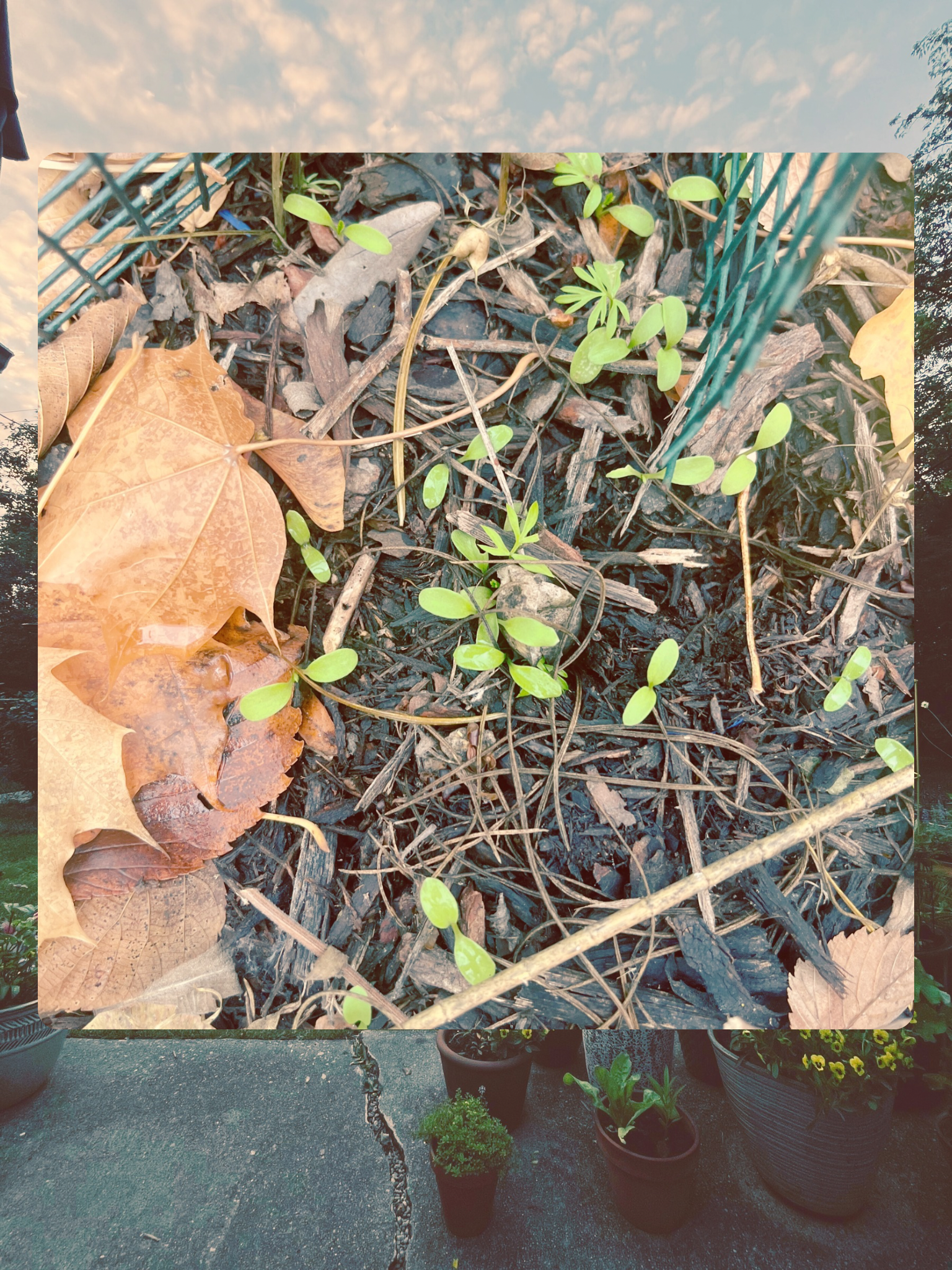
Self-seeded Nigella in the Middle Garden.
I usually categorize these self seeders as fairly easy to grow from seed. They can’t be too fussy if they tolerate my winters and slow draining soil, right? Right! With one note: one of the reasons they do well with self seeding is that their roots don’t get disturbed this way. While many plants aren’t too fussed about root disturbance, Nigella is a bit sensitive to it. Not as much as Poppies or Sunflowers, but enough to take an extra precaution.
So what’s the extra precaution? Simply sow in large cells instead of trays. The large cells should allow the plant enough room for growth before they’re hardened off and plopped in the ground or in a pot. If you’re using a tray and then prick-n-potting (more on that later), then the plant experiences root disturbance that could stall growth or even kill the plant. A reputable seed packet will remind you of this, it should also mention that Nigella needs light to germinate, so barely cover them with soil. This is counterintuitive to the general rule of thumb that they should be planted to a depth that’s twice their size. That would suggest they should be covered with more soil (perhaps ⅛-¼”), given that these seeds are small but not that small.
With just a couple of extra considerations, Nigella can be grown easily. It’s great for new gardens that need a quick show-stopping fill that also gives that cozy cottage feel. How could we not?
Happy sowing!